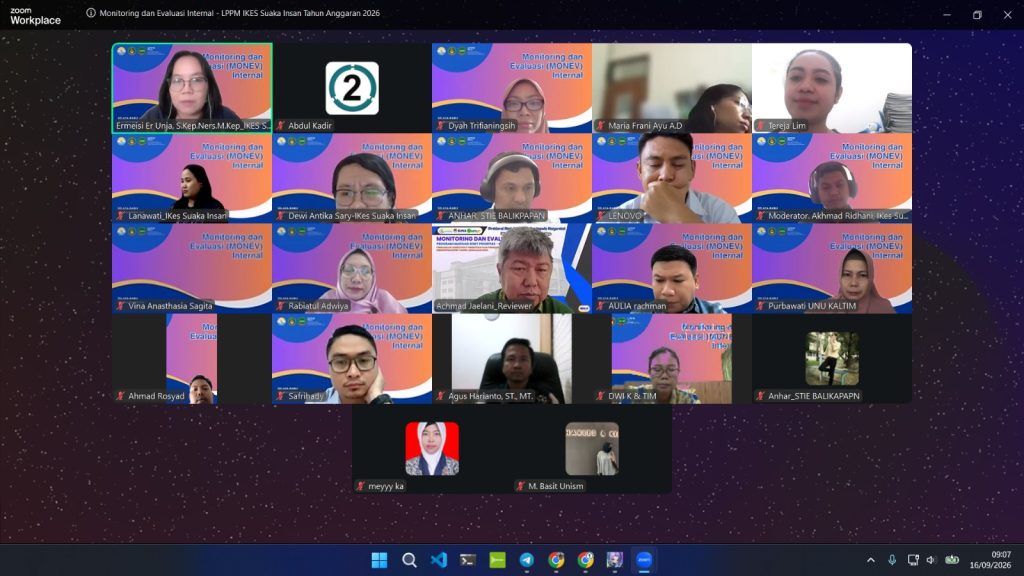

BANJARMASIN — In the rapidly evolving landscape of global healthcare, the distance between a scientific theory and a life-saving community intervention is bridged by one critical element: rigorous evaluation. On September 15 and 16, 2026, the Research and Community Service Institute (UPPM) of Institut Kesehatan Suaka Insan took a definitive step to strengthen that bridge, hosting a comprehensive virtual Monitoring and Evaluation (Monev) summit for 24 distinct research initiatives.
The two-day digital event brought together a diverse cohort of researchers from both within and outside the institution, placing their ongoing work under the discerning lens of top-tier national academics. By inviting independent experts to scrutinize these projects, the institute reinforced a crucial message: academic research must not exist in a vacuum. It must be continually tested, refined, and optimized to serve the public good.
To ensure the highest standards of scientific integrity, the summit was anchored by two distinguished national reviewers: Dr. Yohanes Eko Adi Prasetyanto, S.Si., from Universitas Katolik Atmajaya Jakarta, and Prof. Dr. Achmad Jaelani, S.Pt., M.Si., from UNISKA Banjarmasin. Their dual presence, bridging distinct academic hubs from the nation’s capital to South Kalimantan, provided the researchers with a vital external perspective.

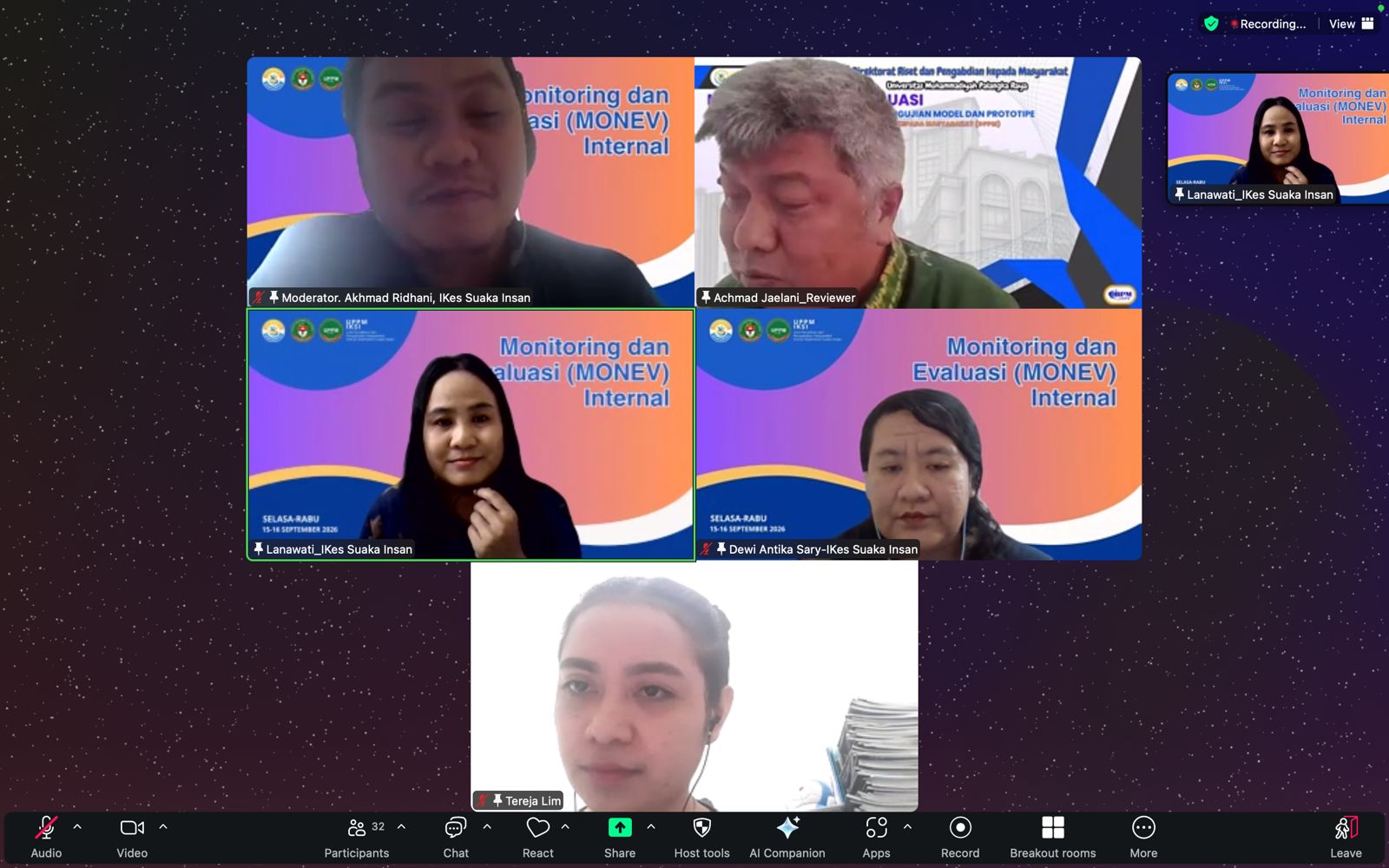
“The goal of this intensive review process is not to critique for the sake of criticism, but to act as a catalyst for excellence,” noted the organizing committee during the opening sessions. “By bringing in highly respected external voices, we dismantle institutional silos and ensure our health initiatives are robust enough to make a tangible difference in human lives.”
For the 24 researchers presenting their progress, the evaluation served as a high-stakes proving ground. Stripped of dense institutional jargon, the core purpose of the event was simple: to guarantee that every funded study, community outreach program, and clinical investigation is on track to deliver real-world impact. Whether the projects focus on advanced clinical nursing protocols, mental health interventions, or grassroots community health literacy, the rigorous feedback loop ensures that resources are utilized effectively and methodologies remain sharp.
The broader implications of this summit extend far beyond the virtual walls of the conference. Today, the international medical community is acutely aware of the need for robust, culturally sensitive, and evidence-based health solutions, particularly in the wake of complex post-pandemic recovery efforts. Global institutions like the World Health Organization continually emphasize that local research is the bedrock of global health security. By demanding national-level accountability for its regional research, IKES Suaka Insan is actively answering this global call. They are ensuring that the data generated in South Kalimantan is reliable enough to inform broader international health dialogues.
The cross-institutional nature of the summit also highlighted a growing trend in modern science: collaboration is the new currency of innovation. By fostering an environment where researchers from various backgrounds must defend, adapt, and refine their ideas alongside external experts, UPPM IKES Suaka Insan is cultivating a generation of adaptable, resilient scientists.
As the two-day evaluation drew to a close, the participants left with refined methodologies, sharpened objectives, and a renewed sense of purpose. The academic rigor demonstrated during the summit guarantees that when these 24 research projects are finalized and published, they will not just be pages in a journal—they will be actionable blueprints for better healthcare [Unit Publikasi-UPPM].