
BANJARMASIN, INDONESIA. In the critical moments following a severe trauma or sudden cardiac event, the margin between life and death is often measured in minutes. Across the globe, health organizations face a universal challenge: ensuring that frontline medical staff are not only equipped to save lives but are also capable of passing those vital skills on to the next generation of responders. Rising to this global mandate, Institut Kesehatan (IKes) Suaka Insan has taken a definitive step forward in emergency healthcare education.
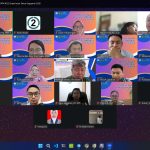
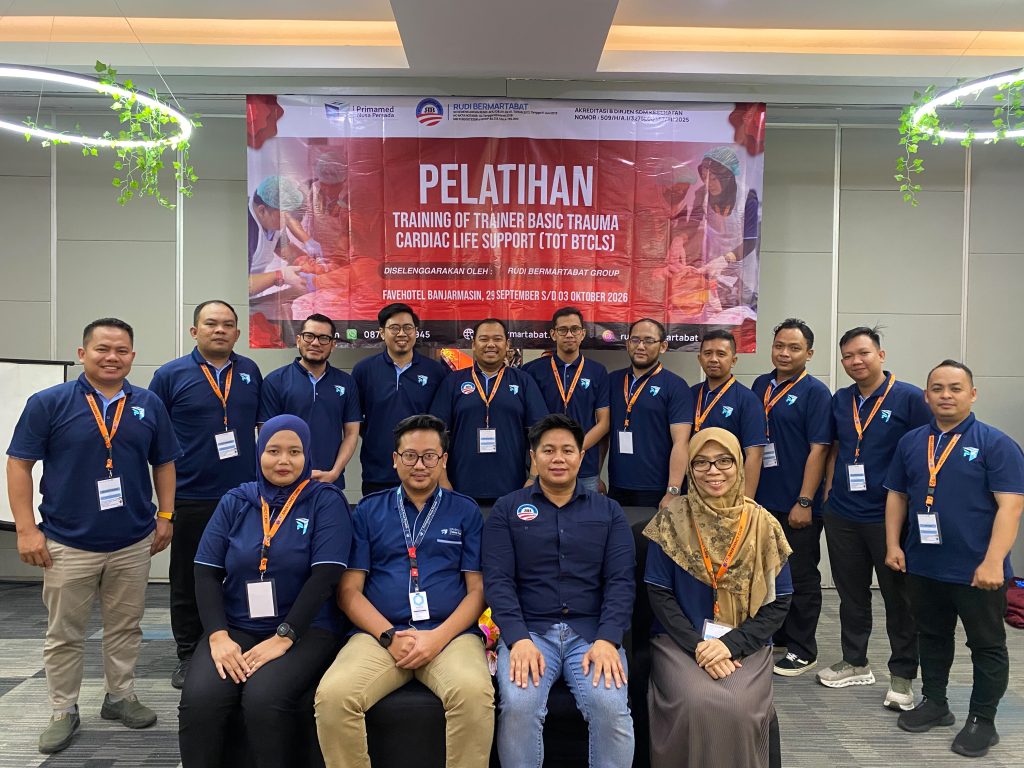
In a strategic initiative to fortify the region’s emergency medical framework, IKes Suaka Insan partnered with the Rudi Bermartabat Group and Primamed Nusa Persada to host an intensive Training of Trainer (ToT) in Basic Trauma and Cardiac Life Support (BTCLS). Conducted through a dynamic hybrid model from September 29 to October 3, 2026, the program brought together a select cohort of 13 healthcare leaders and educators, culminating in rigorous, hands-on simulations at the Fave Hotel in Banjarmasin.
This was not a standard medical refresher course. The initiative assembled a cross-sector coalition of regional health pillars, uniting academics from IKes Suaka Insan and STIKES Intan Martapura with active emergency personnel from the Indonesian Red Cross (PMI Banjar), the Kalimantan Regional Health Crisis Center, and major regional hospitals including RSUD Ulin, RSUD Pembalah Batung, and RSUD Datu Sanggul.
By bringing clinical practitioners and academic educators into the same room, the program forged a unified, rapid-response educational network across South Kalimantan.
Dyah Trifianingsih, S.Kep., Ners., M.Kep., an Emergency and Critical Care Nursing Lecturer at IKes Suaka Insan and a key participant in the program, highlighted the dual nature of the rigorous training.
“We were not only taught the core substance of BTCLS—such as advanced triage, airway and breathing management, and the stabilization of complex head, spinal, and cardiovascular traumas,” Trifianingsih explained. “Crucially, we were taught how to teach. Mastering interactive delivery and micro-teaching techniques is the absolute foundation one must possess before stepping into the role of a BTCLS facilitator.”
This emphasis on pedagogy is what sets the ToT framework apart. The global health workforce is currently navigating a period of unprecedented strain, with the World Health Organization repeatedly emphasizing the need for sustainable, scalable medical training. By teaching clinical experts how to effectively transfer their knowledge through interactive lectures, high-stress simulations, and comprehensive evaluations, the program exponentially multiplies the number of trained lifesavers in the community.
For the participating institutions, the impact of this training is immediate and far-reaching. At IKes Suaka Insan, faculty members like Trifianingsih will integrate these globally recognized emergency protocols directly into the nursing curriculum. This ensures that nursing students do not just learn about emergency care in theory; they are trained by certified emergency facilitators using real-world, high-stakes simulations.
Ultimately, this initiative is about building systemic resilience. When an emergency strikes—whether a localized traffic accident, a sudden cardiac arrest, or a regional natural disaster—the communities of South Kalimantan will rely on healthcare workers who have been trained to global standards of clinical excellence.
As IKes Suaka Insan continues to expand its strategic partnerships and elevate its academic rigor, the institute proves that local initiatives can drive world-class health outcomes [UPPM-Subunit Publikasi].