
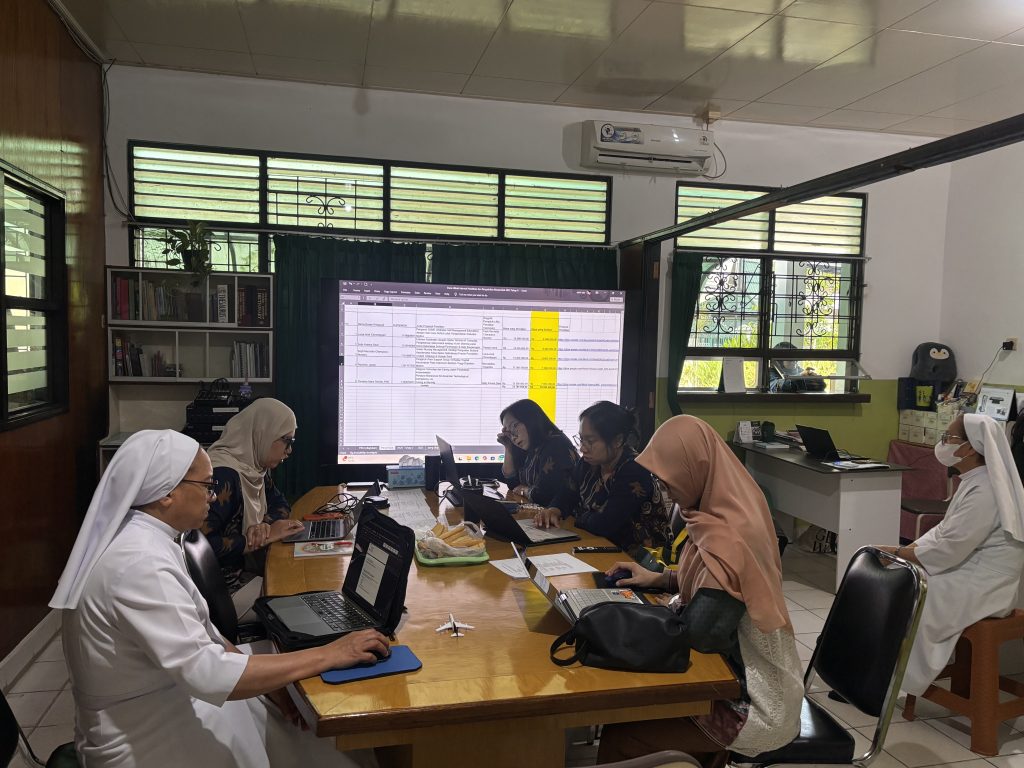

UPPM Ikes Suaka Insan-Banjarmasin. In a bold move to ensure vital health research sees the light of day, Institut Kesehatan Suaka Insan (IKES Suaka Insan) launched a sweeping new internal grant initiative on Wednesday, June 10, 2026. Recognizing that groundbreaking ideas often fall through the cracks of highly competitive national funding, the institute has stepped in to finance high-potential faculty research and community service projects. By rescuing these critical proposals, IKES Suaka Insan is actively bridging the gap between local nursing innovation and pressing global health needs.
The initiative targets projects that narrowly missed external funding from Indonesia’s Ministry of Higher Education (DIKTI). Rather than allowing these vital concepts to be shelved, the institute held a rigorous initial dissemination and review process to identify projects that perfectly align with the core vision of its nursing programs.
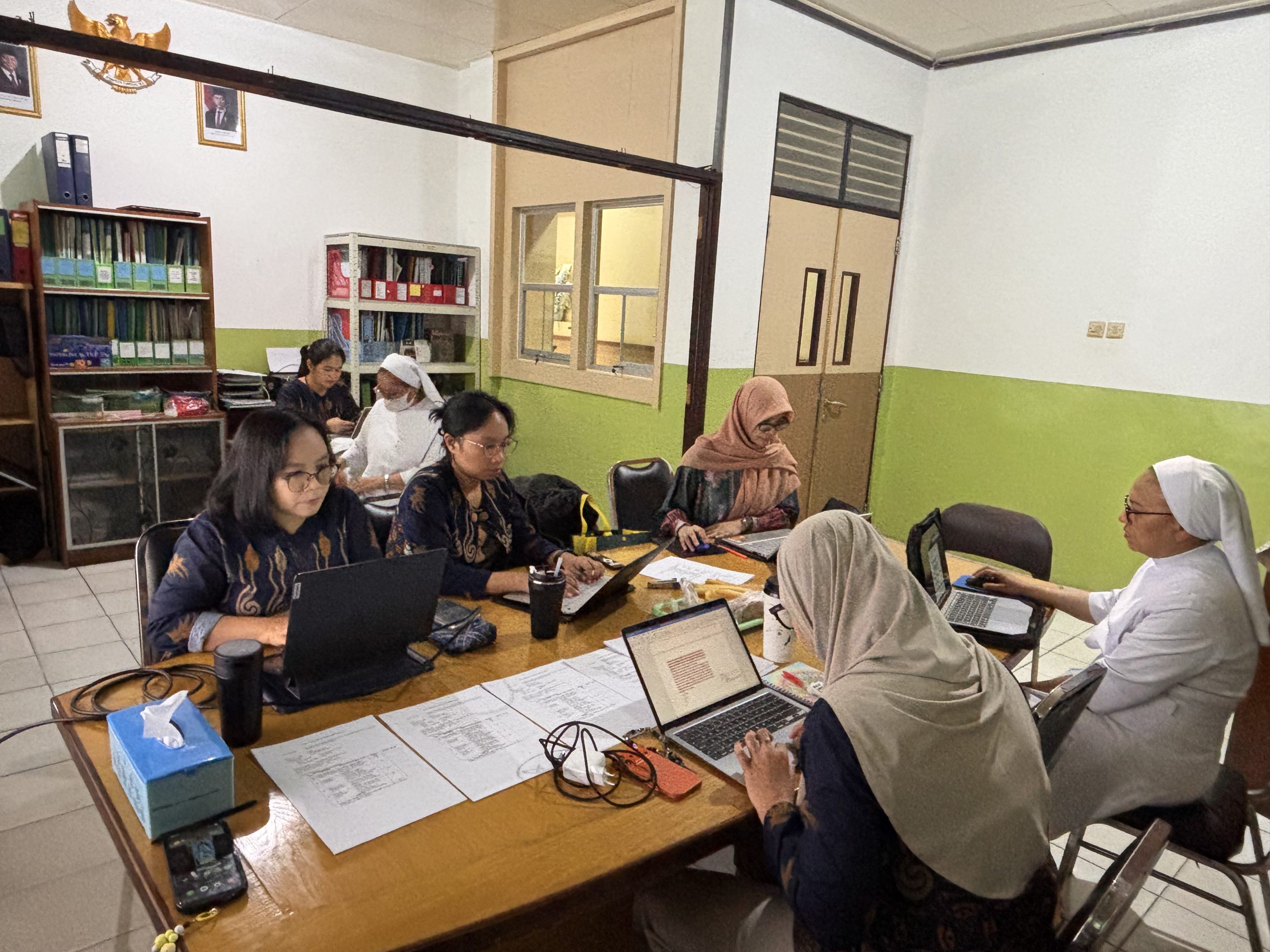
This strategic grant initiative underscores a unified commitment from the institute’s highest levels of leadership. Conceptualized and driven by the Research and Community Service Center (UPPM), this proactive initiative is not a one-off event, but an integral part of the unit’s core daily operations to continuously foster academic excellence. The pivotal review meeting was spearheaded by Rector Sr. Imelda Ingir, SPC., Ph.D., alongside Vice Rector of Finance and Human Resources, Sr. Gertrudis Tutpai, SPC., ensuring robust financial backing for the selected projects. The rigorous academic evaluation framework was directed by UPPM Head Ermeisi Er Unja, M.Kep. She was supported by UPPM Unit Heads Dyah Trifianingsih, M.Kep., and Oktovin, M.Kep., who meticulously assessed the feasibility of each proposal. Furthermore, to guarantee these local innovations achieve global visibility, Publication Coordinator Maria Frani Ayu Andari Dias, MAN, and strategic staff member Thereja Oktavia Lim, M.K.M., guided the publication strategy for the researchers.
The approved proposals tackle some of the most urgent crises facing modern healthcare. From combating chronic illness to addressing environmental sustainability in hospitals, the scope of the research is both deeply local and globally relevant.
Notably, researchers Lucia Andi Chrismilasari and Theresia Jamini are leading separate, innovative studies on diabetes management, one focusing on self-care education and the other on peer support groups. As the World Health Organization warns of a rising global epidemic of non-communicable diseases, these localized interventions offer scalable models for managing chronic conditions in high-risk communities.
Equally vital are the social and environmental projects being championed by the faculty. Selly Kresna Dewi is pioneering a community education program utilizing traditional “Madihin” arts to combat victim-blaming in cases of sexual violence against women, intersecting cultural heritage with fundamental human rights. Meanwhile, Septi Machelia Champaca Nursery is pushing the boundaries of ecological healthcare with a study on “Green Nursing Management,” aiming to optimize the safe disposal of infectious hospital waste, a critical global issue highlighted during the recent pandemic.
“By stepping in where national funding left off, we are declaring that these localized health challenges are simply too important to ignore,” the leadership panel affirmed. “We are empowering our educators to become frontline problem-solvers. When we invest in our faculty’s research, we are directly investing in the future of patient care.”
To ensure these local solutions reach the global academic community, the institute has set rigorous standards. Researchers are required to publish their findings in high-impact, peer-reviewed journals (minimum SINTA 3). Furthermore, the grants are structured with strict financial accountability, disbursing funds in two strategic phases to ensure sustainable project management.
As the world navigates post-pandemic recovery and widespread healthcare worker shortages, the role of academic nursing institutions has never been more critical. IKES Suaka Insan’s commitment to internal funding proves that transformative healthcare solutions do not always require massive international budgets; they require institutional belief, rigorous academic standards, and a deep connection to community needs.
As these diverse projects transition from proposal to practice over the next year, they promise to elevate the standard of health education and clinical care far beyond the borders of Banjarmasin (UPPM Ikes Suaka Insan, 2026).