
Banjarmasin, South Kalimantan. In the ongoing battle against Tuberculosis, a disease that claimed approximately 1.25 million lives globally in 2023, medical interventions alone are proving insufficient. Tuberculosis remains one of the world’s leading infectious causes of death, with approximately 10.8 million people developing the disease globally in a single year. In Indonesia, one of the world’s most heavily burdened countries, healthcare professionals are discovering that the true path to healing lies in bridging the gap between clinical science and local culture. A groundbreaking presentation recently delivered at the Institut Kesehatan Suaka Insan suggests that eradicating this disease requires a profound social and cultural approach alongside traditional medical treatment.
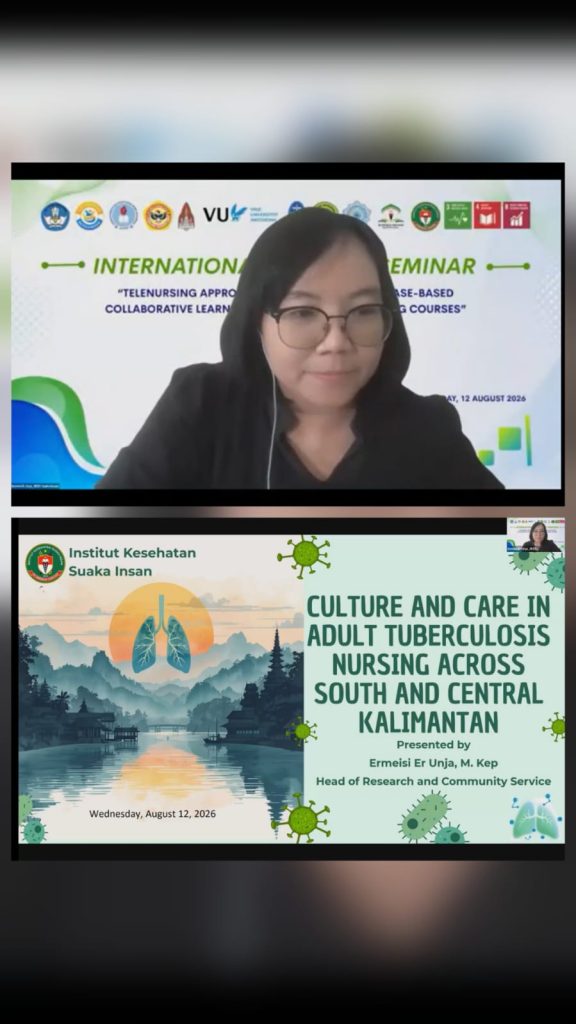
On August 12, 2026, Ermeisi Er Unja, M. Kep, the Head of Research and Community Service at Institut Kesehatan Suaka Insan, unveiled crucial insights into TB management. In a detailed presentation, she outlined the unique challenges and transformative solutions for nursing adult TB patients across South and Central Kalimantan.
The Hidden Challenges of the Indonesian Archipelago
Indonesia’s struggle with TB is compounded by several significant hurdles. Ermeisi highlighted that high incidence rates are just the tip of the iceberg. Healthcare workers face immense geographic barriers, particularly in the remote areas of Kalimantan where communities are often accessible only via long-distance river transportation. Furthermore, socio-economic inequality, limited healthcare access, social stigma, and issues with drug adherence severely complicate the situation.
According to Ermeisi, the TB crisis must be understood through both visible and invisible elements. While diagnosis, medication, and treatment are visible and measurable, the invisible factors, local beliefs, family dynamics, religion, local wisdom, and stigma, often dictate the patient’s actual health behavior. “Culture shapes health behavior long before nurses begin treatment,” Ermeisi emphasized. In Kalimantan, traditional beliefs and family-centered decision-making play pivotal roles in how illness is understood and treated.
The Kalimantan Cultural Tuberculosis Nursing Framework
To address these deeply rooted cultural nuances, Ermeisi developed the Kalimantan Cultural Tuberculosis Nursing Framework. This integrated conceptual model bridges the gap between clinical care and cultural realities, ensuring that nursing practices align with the community’s worldview. The framework is built upon several foundational concepts, starting with the recognition that culture, encompassing values, religion, language, and local wisdom, fundamentally shapes health behavior and decision-making. Closely tied to this are the health beliefs of the community, as their understanding of TB causes and healing directly influences their health-seeking behavior.
The model acknowledges the family as the primary decision-maker and main source of emotional, practical, and financial support, while also leveraging the broader community. Community leaders and peers heavily influence a patient’s acceptance and adherence to treatment. To effectively navigate these dynamics, the framework emphasizes culturally sensitive nursing communication to build mutual trust and respect. This leads directly into tailored education, where health information is adapted to the cultural context and language to ensure better understanding. Ultimately, these steps culminate in medication adherence, ensuring patients take their medication consistently as prescribed, fully supported by their family and community. The final goal is treatment success, which means achieving a cure, preventing transmission, improving quality of life, and reducing the overall TB burden.
The Journey to Healing
The presentation mapped out a comprehensive journey to healing that shifts the paradigm from a purely clinical focus to a patient- and family-centered approach. It begins with health promotion and tailored education to build knowledge. When patients truly understand TB and how it spreads, they are more equipped to recognize symptoms early and understand the importance of completing their treatment without skipping doses.
This knowledge builds trust, a vital component of the healing process. Empathetic, respectful, and confidential care encourages patients to rely on health workers and the healthcare system. Once trust is established, family support acts as the anchor. Families provide medication reminders, emotional encouragement, transportation, and nutritional food support. This comprehensive support network directly influences medication adherence, ensuring the patient completes the full six-month treatment.
A Call for Culturally Responsive Nursing
Ermeisi’s message to the healthcare community is clear in its directive that culturally responsive nursing is essential for better TB outcomes. Nurses are urged to conduct comprehensive cultural assessments, partner with local community organizations, and respect local beliefs while providing accurate medical information. As the presentation powerfully concluded, culture is not a barrier to TB care, but rather the bridge to healing. By moving beyond the clinical chart and embracing the rich cultural tapestry of Kalimantan, healthcare providers have a much stronger chance of ending the TB epidemic. Medication alone does not determine treatment success; as Ermeisi beautifully summarized, if we only treat tuberculosis, we cure a disease, but if we understand culture, we heal a person (UPPM-Ikes Suaka Insan).