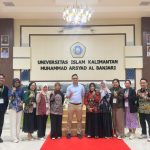
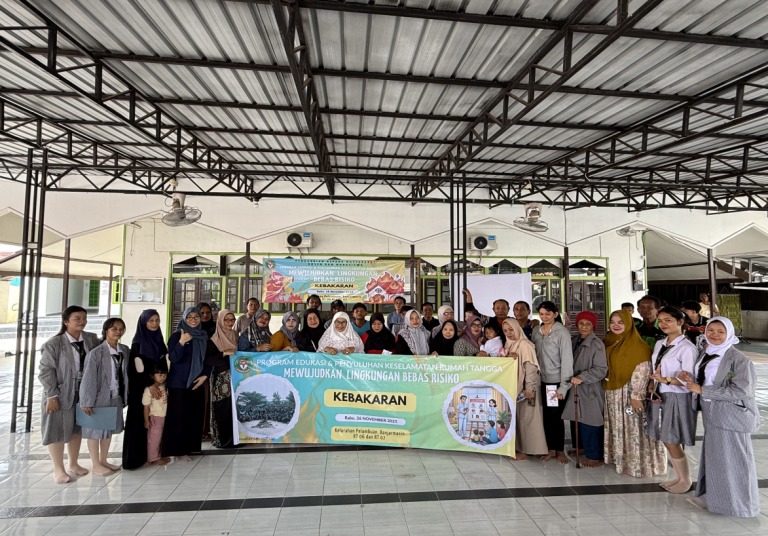

BANJARMASIN, INDONESIA. Every year, structural fires in densely populated urban settlements claim thousands of lives globally, often transforming minor domestic accidents into sweeping community tragedies. In these tightly packed neighborhoods, where standard infrastructure frequently lags behind rapid population growth, the line between safety and catastrophe is paper-thin. Recognizing this urgent threat, a specialized team of health and safety educators launched a critical intervention on November 26, 2025, at the Miftahurrahman Mosque in Kelurahan Pelambuan, Banjarmasin. The mission was clear: equip everyday citizens with the life-saving skills needed to prevent and manage household fires.
The initiative, titled the Household Safety Education Program to Create a Fire-Risk-Free Environment, tackled the root causes of urban residential fires: human negligence, non-standard electrical installations, and the improper use of household appliances. Led by Dyah Trifianingsih, alongside experts Maria Silvana D and Oktovin, the program moved away from dense, theoretical safety lectures. Instead, it delivered an immersive, hands-on masterclass in survival.
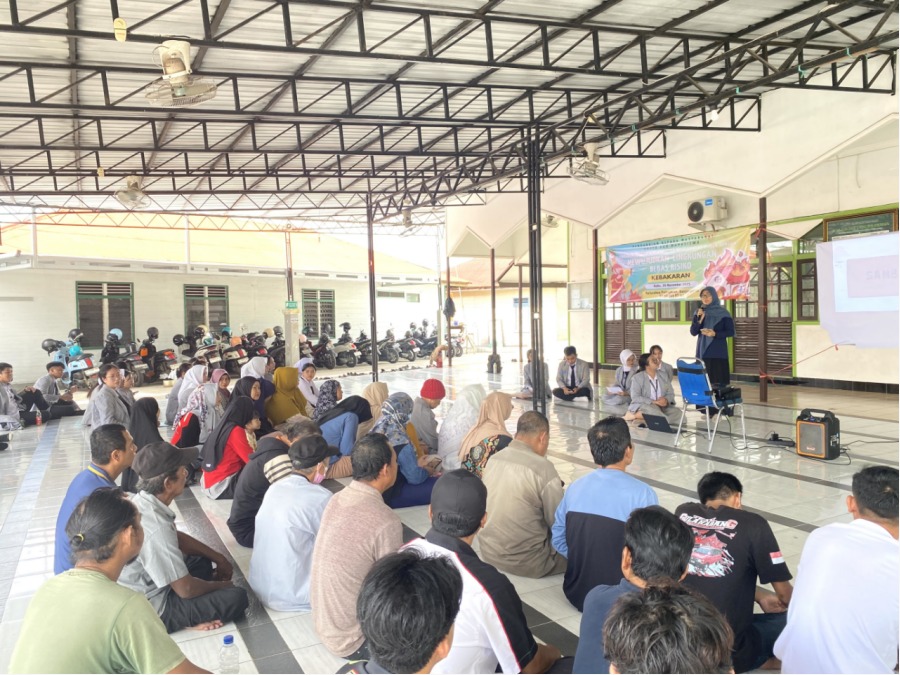
“Before this initiative, nearly 87% of our participants had never received any formal fire safety education,” explained Lead Project Coordinator Dyah Trifianingsih. “In environments where houses are built closely together, ignorance is a community-wide hazard. By stepping out of the clinic and into the community, we are bridging a dangerous knowledge gap and fundamentally shifting how vulnerable neighborhoods protect themselves.”
The intervention was meticulously designed to be accessible. Through interactive discussions, live demonstrations of portable fire extinguishers (APAR), and high-energy household evacuation simulations, the residents of Kelurahan Pelambuan were transformed from passive bystanders into capable first responders. The demographic of the attendees, primarily adults making up over 71% of the group, with an equal balance of men and women, ensured that the knowledge reached the actual decision-makers within the households.
The data resulting from the program paints a profound picture of success. Prior to the training, the community’s baseline understanding of fire safety was alarmingly low, with average test scores hovering at 51.76. Following the practical simulations, those scores surged to 68.82. More importantly, the number of residents demonstrating a “good” understanding of fire safety skyrocketed to 81.6%, while those in the “poor” category dropped to a mere 5.3%.
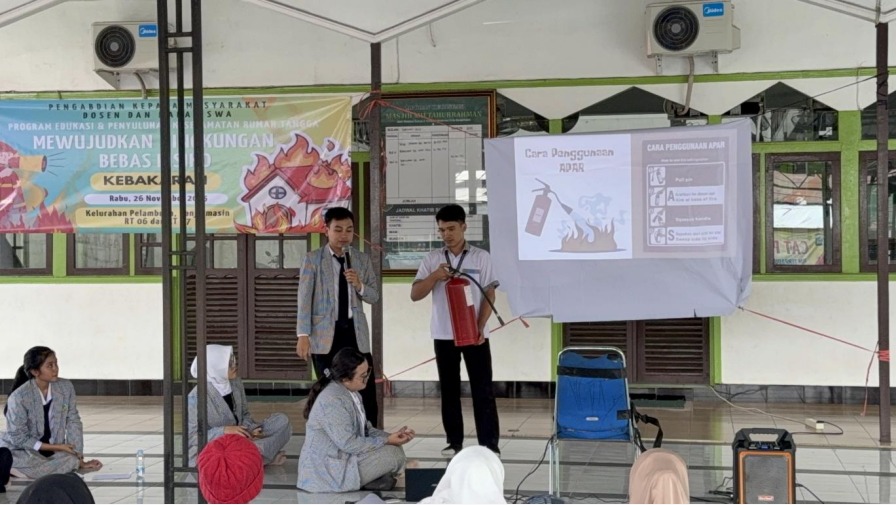
This localized success in South Kalimantan holds significant implications for the broader global health and safety landscape. As the world recovers from recent global health crises, organizations like the World Health Organization (WHO) have increasingly emphasized the need for resilient, health-promoting urban environments. Rapid urbanization is forcing millions into informal or overly dense settlements worldwide. The community-based model executed in Banjarmasin serves as a scalable, cost-effective blueprint for global urban centers facing similar infrastructural vulnerabilities. It proves that when communities are equipped with practical knowledge, they become the strongest barrier against disaster.
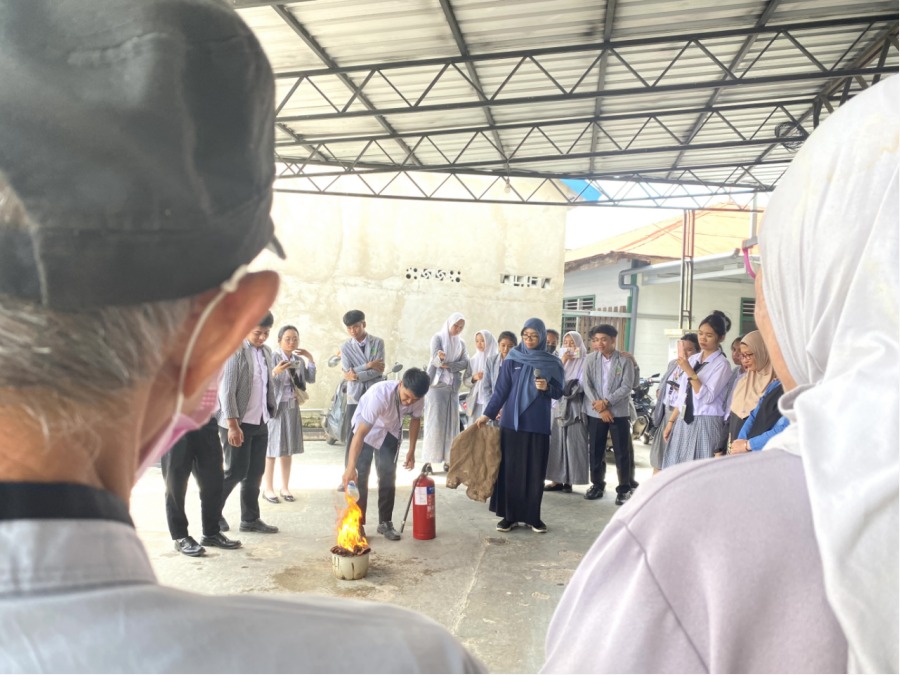
While the immediate results in Kelurahan Pelambuan are cause for celebration, the work is far from over. The research team noted that this educational intervention is merely the vital first step. The ultimate, forward-looking goal is the establishment of permanent, community-based fire response teams, ensuring that vigilance becomes a permanent fixture of the neighborhood’s culture (UPPM-IKES Suaka Insan).